Here's a number that should change how you think about marketing.
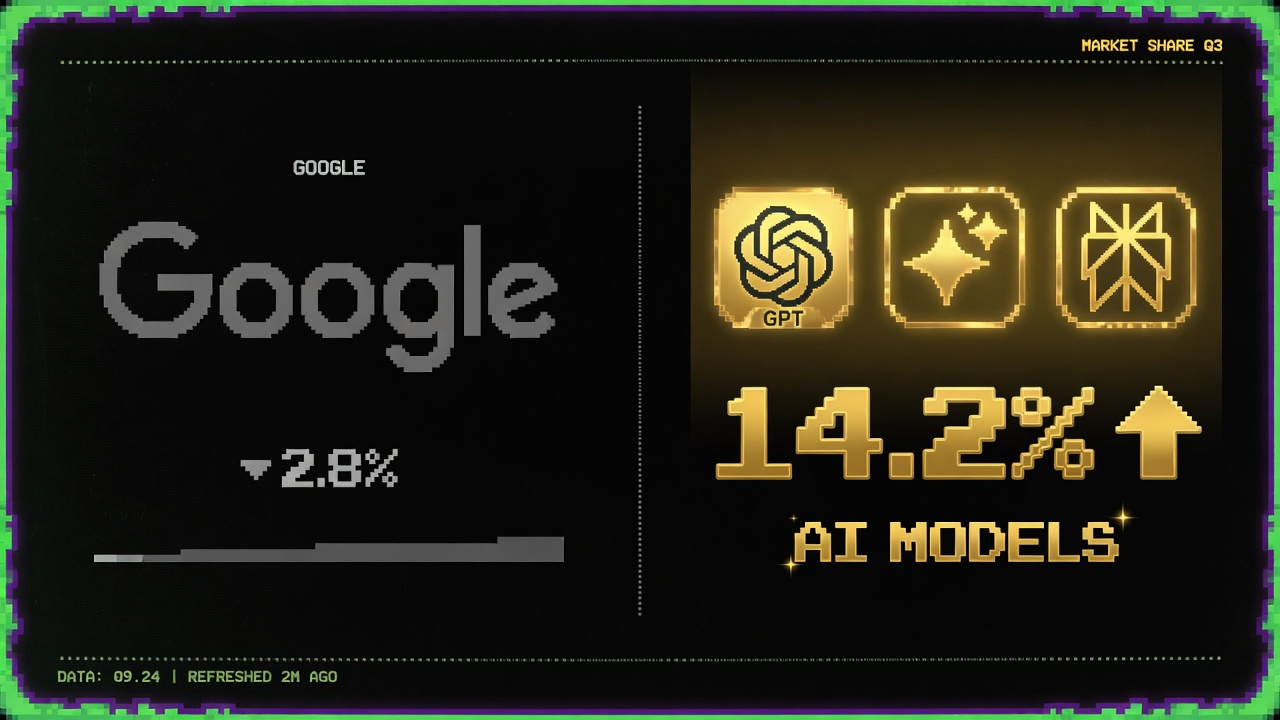
When a user arrives at a product from an AI recommendation — ChatGPT, Perplexity, Gemini — they convert at 14.2%. When that same user comes from Google organic search, the conversion rate is 2.8%.
That's not a rounding error. That's five times better.
The reason makes sense once you think about it. When Google sends someone to your page, they've clicked a result, started reading, maybe scrolled, maybe bounced. They're still in browse mode.
When an AI recommends your product by name — "you should check out [Product], it's specifically built for what you're describing" — the user arrives having already been pre-sold. The AI already evaluated the options and chose you. The buyer just needs to confirm.
AI recommendation is closer to a warm referral than a cold search result. And warm referrals have always converted better than cold traffic. The numbers just confirm what we already knew about how people buy.
The channel is growing fast. Most products aren't in it.
46% of consumers now start product searches in AI engines rather than Google. Leading brands see millions of monthly sessions arriving from ChatGPT, Perplexity, and Gemini combined — sometimes more than from Google organic.
And yet: most products don't appear in those responses at all.
Not because AI is biased against them. Because AI genuinely doesn't know they exist. The training data, the public discussions, the named mentions across forums and blogs and comparison posts — it's just not there. So AI recommends what it does know: the big names, the well-documented tools, the products that already have a hundred threads about them.
The conversion advantage means nothing if you're not in the recommendation in the first place.
What "showing up" actually means
AI doesn't rank pages. It doesn't care about your domain authority or your backlink count. It reconstructs answers from patterns it absorbed during training — and those patterns come from specific types of content.
To show up in AI recommendations, your product needs public signal in a few key forms:
- Direct recognition: AI has seen your product name in enough contexts to know what it is and what it does. Not just your own website — Reddit threads, blog mentions, comparison posts, independent reviews.
- Category membership: AI understands what category you belong in. When someone asks "best tools for X," AI needs to have mentally filed you under that category. That comes from how you're described in public, not how you describe yourself on your own page.
- Co-recommendation signal: When AI mentions your product, what other products does it mention alongside? If you're consistently grouped with category leaders, you inherit credibility. If you're never mentioned alongside anyone, you're a ghost.
The 88% problem
Here's what makes this urgent: 88% of AI citations don't appear in the Google top 10 for the same query.
That means Google ranking and AI visibility are almost completely separate games. You can be #1 on Google and invisible to AI. You can be buried on page 3 and still get recommended by ChatGPT — if the right kind of public signal exists about your product.
This is why optimizing for AI search isn't an extension of your SEO strategy. It's a different discipline. Different signals. Different content types. Different measurement.
Brands cited inside Google AI Overviews earn 35% more organic clicks and 91% more paid clicks than uncited competitors on the same page. The same multiplier effect applies to standalone AI platforms. Being cited isn't just about that one mention — it amplifies everything else.
How to find out where you actually stand
The first step isn't creating content or posting on Reddit. It's understanding your current score across the dimensions that actually matter to AI systems: direct recognition, category ranking, co-recommendation graph, and web authority signal.
Most founders have no idea what these numbers look like for their product. They've never measured it. They're making changes blindly — or not making them at all because they don't know there's a problem.
That's exactly what pickedby.ai measures. Enter your product name and URL, and in about 10 seconds you'll see a score from 0 to 100 with a breakdown across all four dimensions. Free, no account required.
IS YOUR PRODUCT IN THE 5X CHANNEL?
Check your AI Visibility Score — see exactly how ChatGPT, Gemini, Claude, Grok, and Perplexity rank your product right now. Free, ~10 seconds.
CHECK MY SCORE — FREE ▶▶The conversion advantage is real. The question is whether you're positioned to benefit from it — or watching competitors take that traffic while you optimize for a channel that's increasingly secondary.
More on what the data shows: Why ChatGPT doesn't recommend your product (and what to do about it) →